
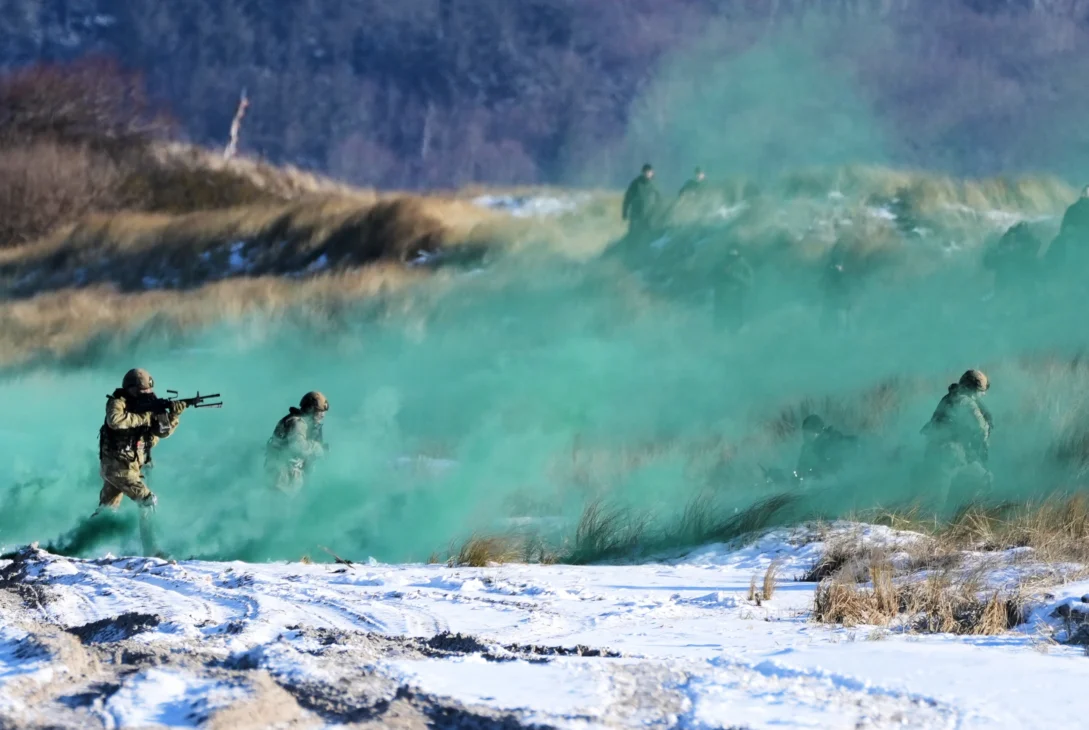
In response to continued security tensions with Russia, the North Atlantic Treaty Organization (NATO) has been ramping up large-scale military drills and operations along its eastern flank, demonstrating alliance readiness and collective defense coordination near the Russian border.
Recent exercises such as Steadfast Dart 2026, conducted in northern Germany, brought together thousands of troops from more than a dozen member nations — including Italy, Greece, Estonia, Lithuania and Turkey — for combined operations involving ground forces, warships and aircraft.
Why NATO Is Escalating Drills
The increased tempo of war games is part of a broader effort by NATO to reinforce deterrence and defense along its eastern border, where multiple member states share borders or airspace close to Russia. This enhanced posture is a direct response to Russia’s ongoing military actions in Ukraine and a series of airspace incursions and hybrid security incidents reported across the region.
Officials involved in drills have emphasized that these exercises are defensive in nature, intended to sharpen interoperability between NATO allies’ forces and ensure rapid, coordinated response in the event of aggression. “These operations send a clear signal that the Alliance is prepared for any provocations,” a senior NATO representative said.
Exercises Across Domains — Land, Air, Cyber
NATO’s preparedness isn’t limited to traditional battlefield maneuvers:
- Land and Air Combat Drills: Multinational battlegroups train in coordinated movement, logistics and air defense simulations along NATO’s eastern flank.
- Maritime Operations: Naval exercises in the Baltic and North Seas stress integration of sea-based defenses with ground and air elements.
- Cyber War Games: In Tallinn, NATO staged large-scale cyber defense simulations testing alliance capabilities against simulated digital attacks aimed at critical infrastructure and communications networks.
These multifaceted drills underscore a recognition that modern warfare includes not just conventional combat but cyber and hybrid threats as well.
Strategic Messaging to Moscow
From NATO’s perspective, the alliance’s increased war gaming is intended both to train forces and to send a deterrent message to Russia — that NATO stands united, capable and ready to defend its members under Article 5, which guarantees collective defense.
While Moscow has criticized the exercises and accused NATO of preparing for conflict, alliance officials maintain the drills are purely defensive and designed to reassure member states in light of shifting geopolitical pressures.
What This Means for Europe’s Security
The heightened tempo of NATO exercises along the Russian border reflects broader geopolitical dynamics in Europe:
- Reinforced Eastern Flank: NATO has increased forces, infrastructure and readiness in frontline countries such as Poland, Lithuania, Estonia and Romania to respond quickly if needed.
- Alliance Unity: Regular training with multiple allies builds cooperation and signals that NATO remains cohesive even as security challenges evolve.
- Deterrence Posture: The message to potential adversaries is clear: aggression against one ally will meet a prepared and collective response from all.





I and my wife stood amazed. Then I realised that the crest of Maybury Hill must be within range of the Martians’ Heat-Ray now that the college was cleared out of the way.
Lorem ipsum dolor sit amet, consectetur adipiscing elit. Fusce vitae tortor varius, blandit turpis nec, condimentum ipsum. Maecenas augue augue, maximus sed gravida a, consequat sed lectu