Eastern Europe — Fighter jets from the NATO were scrambled overnight after a large-scale Russian missile and drone attack on Ukraine triggered heightened alert levels across parts of the alliance’s eastern flank.
According to military officials, the decision to launch aircraft was taken as a precautionary measure after Russian projectiles and drones were detected flying near NATO airspace. While there were no confirmed violations of alliance territory, air defense units and quick-reaction forces were placed on standby.
Overnight Strikes Intensify
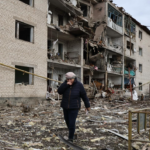
The overnight barrage reportedly targeted Ukrainian energy infrastructure and military-linked facilities, continuing a pattern of long-range strikes that have characterized recent phases of the conflict. Ukrainian authorities said air defense systems intercepted many incoming threats, though some damage to power grids and industrial sites was reported.
Western analysts say such strikes are intended to strain Ukraine’s air defense resources and disrupt civilian life during winter months.
NATO’s Rapid Response
Under NATO’s air policing mission, member states maintain constant surveillance of alliance airspace. When radar systems detect unusual activity or potential risks near borders, fighter aircraft can be deployed within minutes.
Officials emphasized that the scrambling of jets was defensive in nature. “Our actions are precautionary and designed to safeguard alliance territory,” a NATO spokesperson said, reaffirming the alliance’s commitment to collective security.
Eastern member states, particularly Poland and the Baltic countries, have consistently called for heightened vigilance amid ongoing hostilities in Ukraine.
Rising Regional Tensions
The Kremlin has accused NATO of escalating tensions through increased military deployments in Eastern Europe. Meanwhile, alliance leaders argue that Russia’s continued military operations in Ukraine justify enhanced deterrence measures.
Security experts warn that the proximity of military activity to NATO borders increases the risk of accidental escalation or miscalculation. Communication channels between military commands remain critical in preventing unintended confrontations.
Broader Implications
As the war in Ukraine enters its fifth year, cross-border security concerns are becoming more frequent. The scrambling of NATO jets underscores how the conflict’s impact extends beyond Ukraine’s territory, influencing defense postures across Europe.
For NATO, maintaining readiness while avoiding direct confrontation with Russia remains a delicate balancing act. For now, alliance officials stress that their primary objective is deterrence — ensuring that the conflict does not spill into member states.