
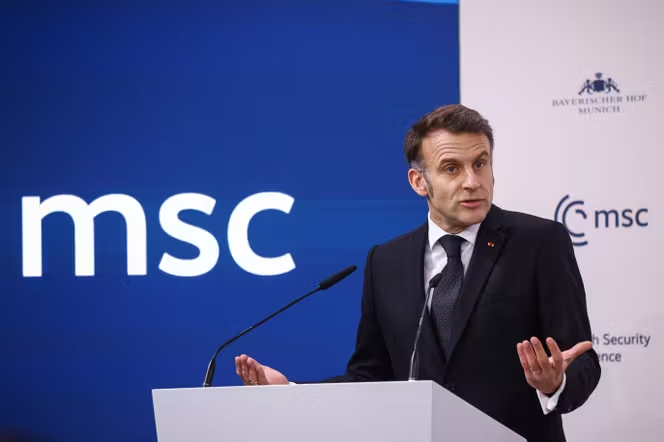
Paris / Munich — France has called on European nations to step up and transform the European Union into a true geopolitical force, arguing that the continent can no longer rely solely on external powers for its security and strategic direction.
Speaking at a major international security forum, French President Emmanuel Macron stressed that Europe must develop the capacity to act independently in matters of defence, energy security, technology, and foreign policy. His remarks come as the war in Ukraine enters its fifth year and global tensions continue to reshape alliances.
A Call for Strategic Autonomy
France has long advocated for what it calls “European strategic autonomy” — the idea that the European Union should be capable of defending its interests without overdependence on other global actors.
Macron argued that recent crises — from the Russia-Ukraine war to energy disruptions and supply chain vulnerabilities — have demonstrated the need for Europe to strengthen its defence industries and coordinate more closely on foreign policy decisions.
“Europe must be a power in its own right,” the French leader said, emphasizing the importance of unity in the face of growing geopolitical competition.
Security at the Forefront
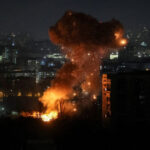
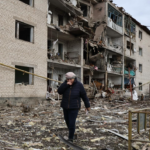
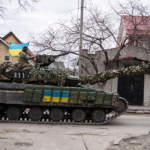
The call comes amid heightened security concerns across the continent. With Russia’s continued military operations in Ukraine and NATO’s expanded presence along its eastern flank, European governments are increasing defence budgets and accelerating joint procurement initiatives.
France has urged deeper cooperation among EU member states, including investment in joint military capabilities, cyber defence, and advanced technologies such as artificial intelligence and space systems.
Analysts note that while Europe remains closely aligned with the United States through NATO, there is growing recognition in Brussels and other capitals that Europe must enhance its own strategic capacity.
Energy and Economic Independence
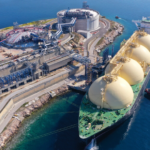
Beyond military matters, France is pushing for Europe to reduce economic vulnerabilities. The war in Ukraine exposed Europe’s dependence on Russian energy supplies, leading to a rapid shift toward diversified gas sources and renewable energy investments.
Macron highlighted the need for resilient supply chains and stronger industrial policy to compete with both the United States and China in critical sectors such as semiconductors and green technologies.
Divisions and Challenges
Despite broad agreement on the need for greater European coordination, differences remain among member states regarding defence integration and fiscal commitments. Some countries favor stronger ties with NATO as the primary security guarantee, while others back France’s vision of a more independent European defence structure.
Observers say the coming years will test Europe’s ability to translate rhetoric into concrete action. Increased defence spending, policy harmonization, and institutional reforms will be required if Europe is to emerge as a unified geopolitical actor.
A Defining Moment for Europe
As global power balances shift, France’s message signals a broader debate within the EU about its future role on the world stage. With the Ukraine war ongoing and new geopolitical flashpoints emerging worldwide, Europe faces mounting pressure to assert itself diplomatically, economically, and militarily.
Whether Europe can evolve into the geopolitical power envisioned by France will depend on political will, unity, and sustained investment — factors that will shape the continent’s influence well beyond 2026.


When the amphitheater had cleared I crept stealthily to the top and as the great excavation lay far.
He pays regular, was the rejoinder. But come, it’s getting dreadful late, you had better.
Then going through some small strange motions with it—whether indispensable to the magnetizing of the steel, or merely intended to augment the awe of the crew.