In a major geopolitical shift amid rising global competition over technology and supply chains, India has formally joined a U.S.-led initiative aimed at building secure and resilient technology supply networks focusing on semiconductors, artificial intelligence (AI), critical minerals and advanced manufacturing. This move marks a deepening strategic partnership between India and United States, and comes amid broader efforts by democracies to reduce dependence on supply chains dominated by potential geopolitical rivals.
What Happened?
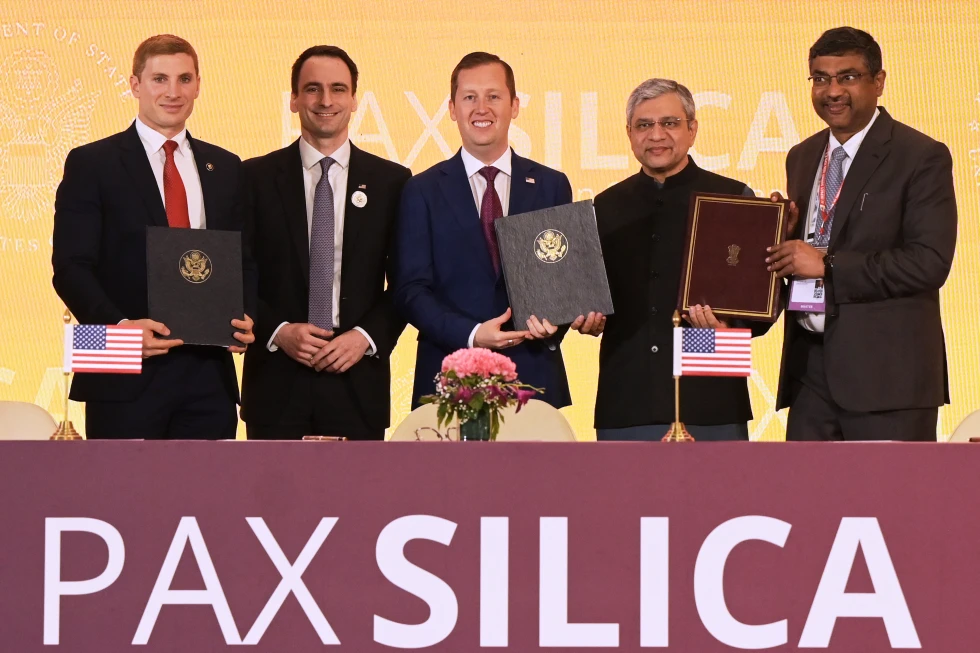
At the India AI Impact Summit 2026 in New Delhi, officials from both countries signed the Pax Silica declaration, bringing New Delhi into a coalition of strategic partners working to secure technology supply chains essential for future industries.
This coalition — known as Pax Silica — was originally formed to strengthen cooperation among trusted nations on technologies ranging from semiconductor fabrication to AI infrastructure and critical raw materials, reducing risks from over-dependence on any single country’s manufacturing hubs.
Why It Matters
- Strategic Competition with China: The initiative is widely seen as part of a broader effort to counter China’s dominant role in global supply chains, particularly in areas like rare earth minerals and semiconductor production.
- Strengthening Alliances: India’s addition to Pax Silica brings a major economy and manufacturing power into a tech security framework that already includes nations such as Japan, South Korea, the U.K., Israel and others.
- Economic and Defense Cooperation: India’s participation follows recent steps toward an interim trade deal with the United States, including reduced tariffs and enhanced market access, signaling improved bilateral ties beyond traditional trade agreements.
- Building Technology Capacity: By joining the pact, India stands to benefit from joint investments, supply chain diversification and closer collaboration on next-generation technologies from chipmaking to AI systems.
Strategic Impact
Officials from both countries emphasized that the partnership will help create a trusted and resilient technology ecosystem, one capable of supporting democratic values and economic security in an era of heightened geopolitical competition. Pax Silica’s goals include aligning policy, encouraging shared investment, and safeguarding essential technologies from strategic coercion or disruption.
U.S. Ambassador Sergio Gor called India’s entry “strategic and essential,” while Indian leaders highlighted the opportunities such cooperation creates for domestic technology industries, particularly in semiconductors and AI.
What This Means Going Forward
India’s inclusion in Pax Silica signals a deeper level of trust and cooperation between New Delhi and Washington, reflecting a shift in geopolitical priorities where technology security and supply chain resilience are becoming central pillars of international alliances. This could reshape the global technology landscape in coming years, especially as demand grows for semiconductors, AI platforms and the critical minerals that power them.