
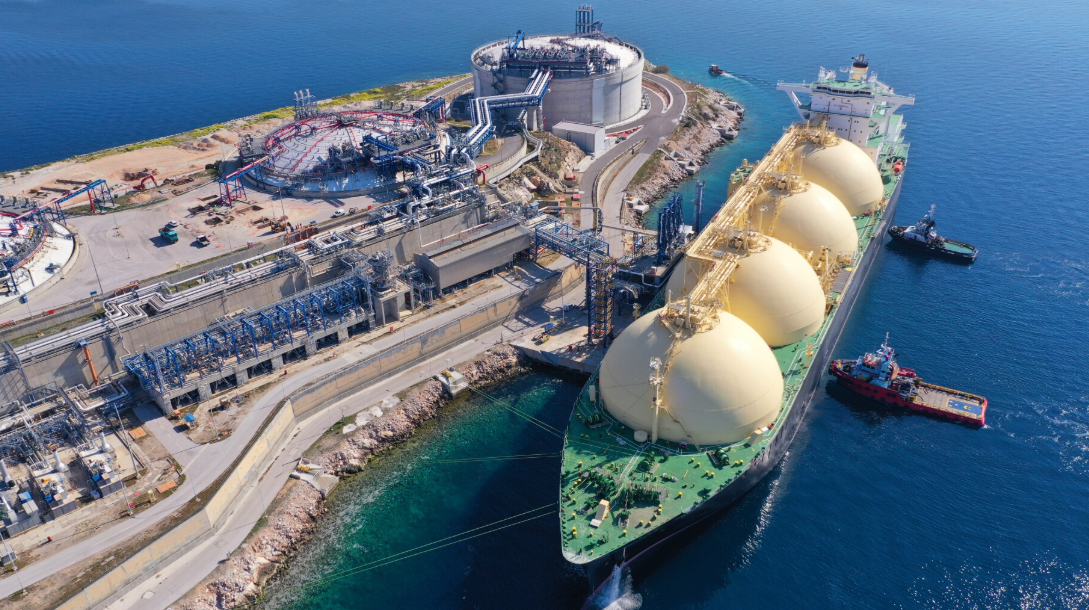
In a major strategic shift for Europe’s energy landscape, Greece is emerging as a central hub for liquefied natural gas (LNG) and energy distribution as the European Union prepares to phase out Russian gas entirely by 2027. The move comes amid efforts to reduce reliance on Moscow’s fossil fuels following the Russia–Ukraine war and the EU’s planned ban on Russian gas imports.
A Strategic Southern Gateway
Greece’s geographic location at the southeastern edge of Europe — with access to the Mediterranean and proximity to key shipping routes — gives it a distinct advantage as the continent shifts toward energy diversification and security. Building on its existing liquefied natural gas infrastructure, Greece is positioning itself as the southern gateway for LNG imports, particularly from the United States and other major exporters.
Greek energy officials and policymakers have emphasized the importance of decoupling from Russian gas after decades of heavy dependence. Prior to the 2022 invasion of Ukraine, Russian gas made up a significant portion of the European Union’s energy supply — around 40% — but that figure had fallen sharply to about 11% by 2024 as Europe diversified its sources.
Infrastructure and Expansion
Key to Greece’s strategy are its LNG terminals, including the major Revithoussa facility near Athens and the newly operational Alexandroupolis Floating Storage Regasification Unit (FSRU) in the north. These facilities allow Greece to import LNG by sea, regasify it, and then transmit it northward into the European energy grid via pipelines — a route often called the “vertical corridor.”
Officials are also pursuing offshore gas exploration and wider energy partnerships. A recent deal saw a consortium led by Chevron sign exclusive agreements to explore deep‑sea natural gas blocks south of Greece’s Peloponnese and Crete regions, signaling renewed investment in potential domestic gas resources.
Political and Economic Implications
Greek leaders have framed the energy pivot as both an economic opportunity and a geopolitical necessity. Prime Minister Kyriakos Mitsotakis and other officials have highlighted deepening ties with the United States and other allies as crucial in supporting Europe’s energy transition. Closer cooperation on LNG imports and energy infrastructure is seen as bolstering Greece’s role not only as a consumer but as a major energy transit and distribution hub for Southeastern and Central Europe.
While critics caution that replacing Russian gas with U.S. LNG could create new dependencies — particularly on American exports that can be more expensive and subject to global market fluctuations — supporters argue that diversified energy sources enhance Europe’s long‑term security.
Impact on Europe’s Energy Security
Greece’s energy strategy highlights the broader shifts underway in European energy policy. Countries across the EU are rapidly building new import terminals, diversifying supply agreements, and enhancing cross‑border pipeline networks to avoid reliance on Russian pipelines and markets. Greece’s emerging position as a southern LNG gateway strengthens the EU’s resilience against future disruptions, supporting both economic stability and geopolitical autonomy.





Hi, this is a comment.
To get started with moderating, editing, and deleting comments, please visit the Comments screen in the dashboard.
Commenter avatars come from Gravatar.